Point-in-Time Penetration Testing
Raxis Strike
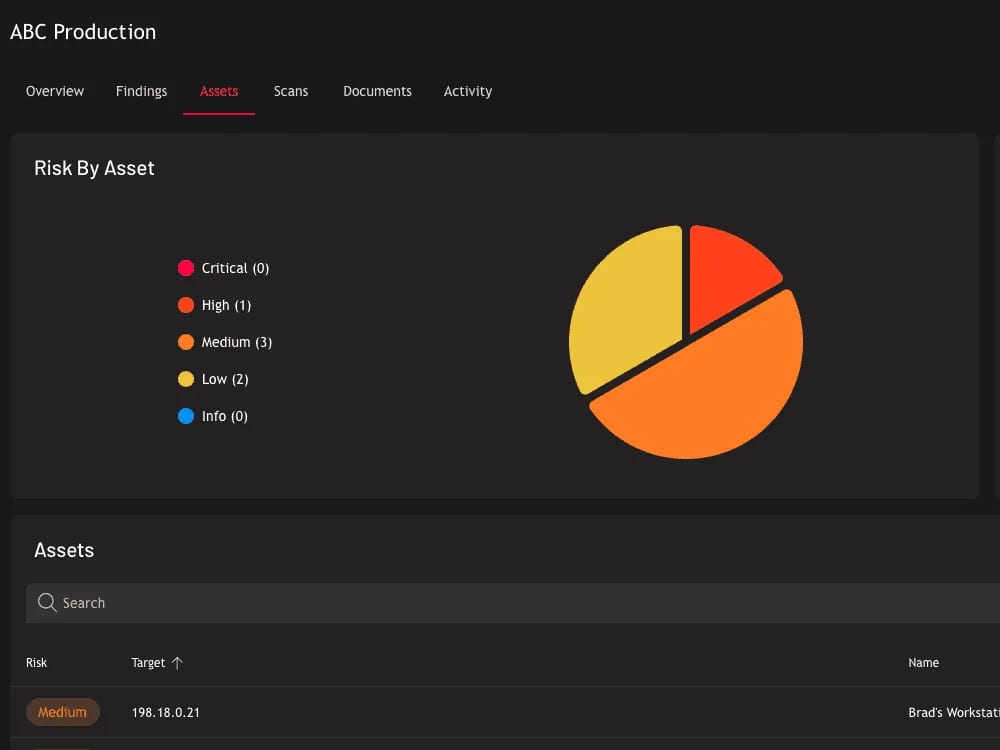
A fixed window, full depth, a report you can hand to an auditor.
Best when you have a migration, an audit, or a first test to get right.
One key. Admin in three hops.
A developer leaks one access key with almost no permissions. A senior U.S. engineer walks it from role to role to the data, by hand. AWS, Azure, or GCP. When we reach what matters, we leave a card.
sts:AssumeRole
The permission that opened each hop
Nothing replaces skill. Illustrative chain. Not one role was misconfigured on its own.
Overprivileged roles, loose trust policies, and escalation paths across AWS IAM, Entra ID, and GCP Cloud IAM.
Buckets and Blob containers that leak data, or take writes from anyone who asks.
EC2, Azure VMs, Lambda, and Cloud Functions: exposed metadata, weak configuration, exploitable workloads.
Security groups, VPC peering, and the services that let an attacker move sideways once inside.
The seams between cloud and on-prem, where synced identities open doors neither side sees alone.
We chain findings by hand and prove impact, instead of listing misconfigurations.
Far more access than the job needs, turning one key into the whole account.
Customer data and backups, one URL from the internet.
Long-lived keys in a repo, an app bundle, or an environment variable.
Misconfigured SSO and directory sync that bridge on-prem to cloud, or tenant to tenant.
Management ports and internal services open to the world.
Abandoned test accounts, unmonitored and fully exploitable.
Raxis Strike
A fixed window, full depth, a report you can hand to an auditor.
Best when you have a migration, an audit, or a first test to get right.
Raxis Attack
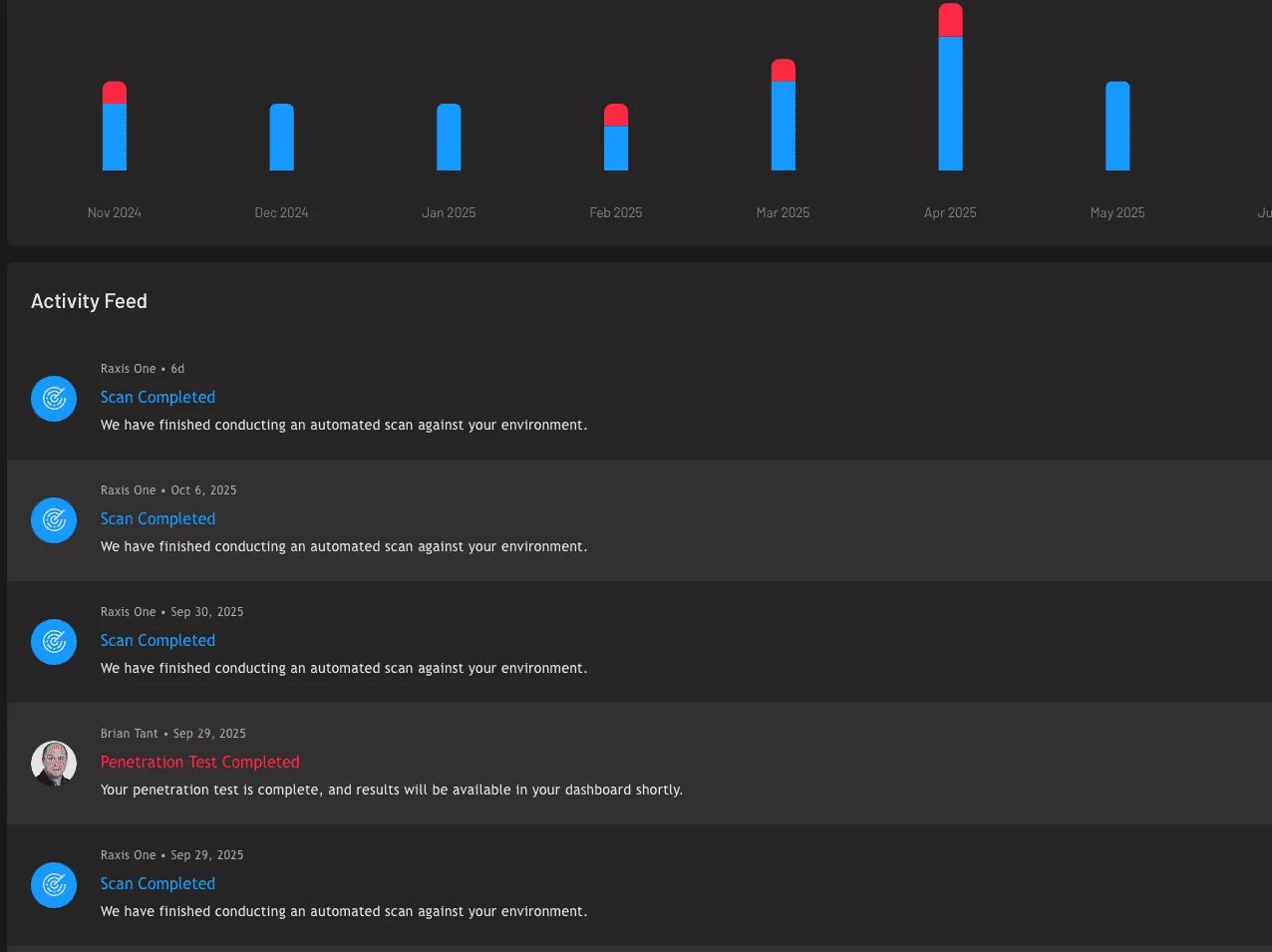
Unlimited manual testing all year, findings live the moment we confirm them.
Best when your accounts change faster than an annual test can follow.
A concise readout for leadership and auditors.
Each with a severity rating, reproduction steps, and clear remediation.
The whole path, from the key we found to the data it reached.
We verify your fixes and deliver a clean final report, at no extra cost.
It is a test of your cloud environment run from the position a real attacker would hold: a leaked access key, an overprivileged role, or a foothold in one service. From there our engineers try to escalate privileges, reach sensitive data, and move between accounts and services the way an intruder would across AWS, Azure, GCP, and beyond.
A network pentest focuses on hosts, services, and segmentation. Cloud testing centers on identity and configuration: IAM roles, storage permissions, key management, and the trust between services. The most serious cloud findings are rarely unpatched software; they are misconfigurations that hand an attacker access the moment they get one credential.
A posture scan (CSPM) flags settings that deviate from a baseline. A Raxis cloud pentest takes those findings and proves what they mean: we chain a public bucket, an exposed key, and an overprivileged role into a demonstrated path to your data. We remove false positives and show real impact, not a list of yellow warnings.
AWS, Microsoft Azure, and Google Cloud are the platforms we test most often. We also test Salesforce, hybrid and on-premises deployments, and providers such as DigitalOcean, Linode, and IBM Cloud. Multi-cloud and hybrid environments are the norm, and we assess your full footprint in a single engagement.
For AWS, Azure, and GCP, most penetration testing on your own resources no longer requires advance approval, though each provider draws a line at certain activities such as denial-of-service and testing shared infrastructure. We know where those lines are, keep testing inside policy, and help you file a notification for the rare cases that still need one.
We deploy a virtual Transporter directly into your VPC, hybrid, or private cloud, so testing runs from inside your environment the way a compromised workload would see it. For configuration and identity review we also use scoped, read-appropriate API credentials you provision. Setup takes minutes and there is no hardware to ship.
Both, and the combination tells the fuller story. We start unauthenticated to find what is exposed to the internet, then run an assumed-breach test with a low-privilege identity to measure how far one leaked key or phished account can reach. Testing the escalation path is where cloud engagements find their highest-impact issues.
It is very unlikely. We avoid disruptive techniques by default, flag anything fragile during kickoff, and can test against a staging environment or inside a maintenance window when that fits better. Our goal is to prove risk, not to break your workloads.
Yes, and it is often where the real risk lives. Synced directories, federated logins, and trust relationships between cloud and on-prem create attack paths neither side sees alone. We test the seams, showing how a foothold in one environment opens the door to the other. This pairs naturally with a Raxis internal network penetration test.
At least once a year, and after any major change such as a new platform, a migration, or a significant architecture shift. Cloud environments change faster than traditional networks, so many teams pair an annual point-in-time test with continuous coverage through Raxis Attack to catch drift as it happens.
Most cloud engagements run one to three weeks, including reporting. The range depends on the number of accounts, subscriptions, or projects in scope and how many services and identities each one holds. We give you a firm timeline once scope is set.
Yes. Cloud penetration testing supports PCI DSS, SOC 2, HIPAA, GLBA, ISO 27001, and CMMC, and it is increasingly expected by cyber insurance underwriters. Raxis reports are written to satisfy auditors and include an attestation letter you can share with customers and partners.
Scope is the main factor: the number of cloud accounts, the platforms involved, and the count of services and identities in play. Contact us for a quote sized to your environment.
Senior US-based Raxis engineers holding certifications such as OSCP and OSCE. No outsourcing, and no junior testers learning on your environment.