

Written by Brad Herring
In the ever-evolving landscape of cybersecurity, passwords remain the frontline defense for our digital lives. At Raxis, we specialize in red team engagements and penetration testing, helping organizations identify vulnerabilities before malicious actors can exploit them.
That often means that our penetration testers gain access (through complicated means I will let them explain in other blogs) to many cleartext passwords. When that happens, they provide statistics about the discovered passwords to our customers.
We find that, while many customers want to know how strong passwords are, a key concern that often flies under the radar is missed… what do those passwords say about the user. Today, I’d like to discuss why choosing the right password goes beyond complexity. Instead it’s about protecting your privacy and professionalism in ways you might not expect.
The Basics: Unique and Evolving Passwords
Let’s start with the fundamentals. A strong password is your first barrier against unauthorized access. It should be unique to each account. Think of it this way, reusing the same password across multiple sites is like leaving the same key under every doormat in your neighborhood. If one account gets compromised, all others become vulnerable.
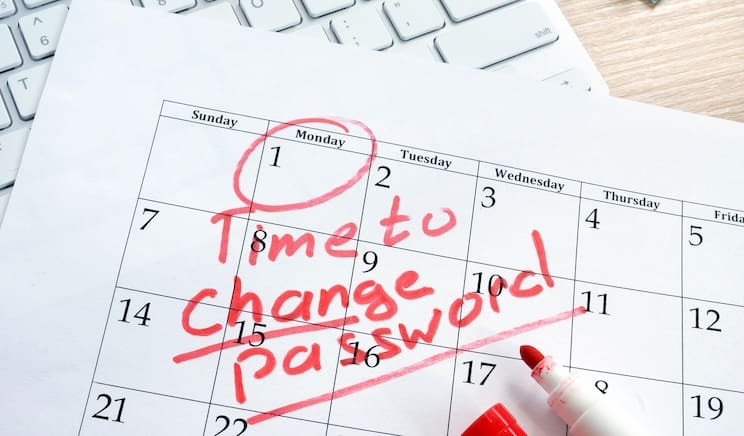
Best practices also recommend changing passwords periodically, especially for critical accounts like email, banking, or work systems. This isn’t just about refreshing for the sake of it; it’s a proactive step to mitigate risks from undetected breaches. If a password has been exposed in a data leak (which happens more often than you’d think), rotating it ensures that old credentials can’t be used against you. Tools like password managers can make this process seamless, generating and storing complex passwords without the hassle of memorization.
But here’s where things get interesting… and potentially awkward. While focusing on length, complexity (mixing uppercase, lowercase, numbers, and symbols), and uniqueness is crucial, the content of your password deserves equal scrutiny.
The Perils of Expressive Passwords
We’ve all had those frustrating days at work where venting feels necessary. But channeling that frustration into your password? That’s a recipe for regret. Passwords like thisJ0bSUCKS2@ or IhateMYb055 might seem like a harmless private joke (after all, who’s going to see them?), but unfortunately, in the world of cybersecurity, passwords aren’t as private as they appear.
During routine security assessments, penetration testers often gain access to systems they can work to exploit for credentials. These exercises simulate real-world attacks, attempting to guess or brute-force passwords using dictionaries of common words, variations, and patterns. If your password includes disparaging remarks about yourself, your job, boss, or colleagues, it could be cracked and documented in a report. These reports are shared with IT teams and often executives. Imagine your clever quip about hating your manager ending up in a boardroom discussion. Our pentesting team at Raxis has seen that happen.
It gets worse. Cracked passwords from breaches are often leaked onto dark web forums, where cybercriminals trade stolen data. Organizations routinely monitor these spaces as part of their threat intelligence audits. If your password surfaces there, it could reveal more than just a security flaw. It might expose personal sentiments that could damage your professional reputation or lead to uncomfortable conversations.
Self-deprecating passwords fall into the same trap. Something like ImAnIdi0t2023! might feel self-aware and secure due to its complexity, but, if exposed, it could undermine your credibility or invite unwanted scrutiny. You would likely be shocked at the negative messaging we see in passwords as a common occurrence in our testing.
In a recent engagement, we cracked a high percentage of 12+ character passwords. Many of these passwords contained messaging that is very unlikely the users would want discovered. Unfortunately, that particular penetration test is not an anomaly.
The key question to ask yourself when crafting a password: If this were to become public, would I be okay with people seeing it?
Real-World Implications and How to Avoid Them
At Raxis, we’ve seen firsthand how seemingly innocuous choices can lead to bigger issues. Passwords aren’t just strings of characters; they’re potential windows into your mindset.
To stay safe:
- Aim for Neutral Complexity: Use random combinations or passphrase generators. For example, turn a neutral phrase like @2BlueSkyC0ffeeRain! into something strong and forgettable to outsiders.
- Leverage Password Managers: These tools create and store passwords that are complex without being personally revealing.
- Enable Multi-Factor Authentication (MFA): Even the best password is stronger with a second layer of verification.
- Think Exposure-First: Always consider the what if scenario. Passwords can be exposed through breaches, shoulder-surfing, or even shared devices.
By treating passwords as potentially public artifacts, you not only enhance your security but also safeguard your personal and professional image.
Final Thoughts: Passwords with Purpose
In cybersecurity, the goal is protection – both digital and personal. Unique, regularly updated passwords are essential, but steering clear of ones that disparage or reveal ill thoughts takes your strategy to the next level. At Raxis, we’re committed to helping you build resilient defenses that consider the human element. Remember: A good password doesn’t just lock the door; it ensures that, if the lock is exposed, there’s nothing embarrassing waiting on the other side.
If you’re concerned about your organization’s password policies or want to simulate a real attack to uncover your company weaknesses, reach out to Raxis for a consultation.

Brad Herring
Search The Exploit Blog
Blog Categories
- AI
- Careers
- Choosing a Penetration Testing Company
- Exploits
- How To
- In The News
- Injection Attacks
- Just For Fun
- Meet Our Team
- Mobile Apps
- Networks
- Password Cracking
- Patching
- Penetration Testing
- Phishing
- PTaaS
- Raxis In The Community
- Red Team
- Security Recommendations
- Social Engineering
- Tips For Everyone
- Web Apps
- What People Are Saying
- Wireless
